
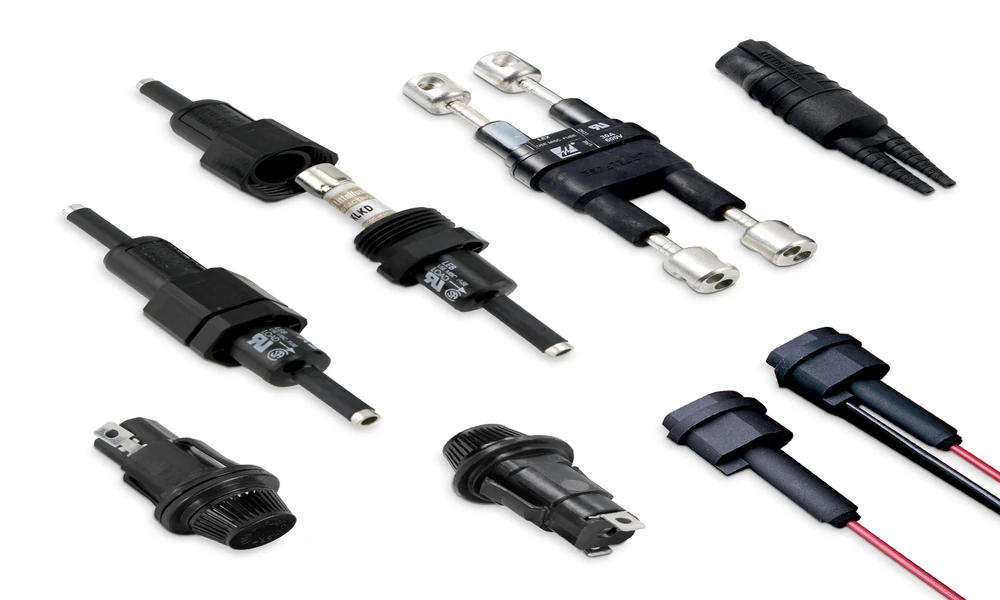
When designing an electrical system – whether for industrial machinery, automotive applications, or consumer electronics – one of the most overlooked yet critical decisions is selecting the right fuse holder. The choice between panel mount and inline configurations directly affects how accessible, serviceable, and reliable your circuit protection will be over time. Understanding the key differences between these two types helps engineers and procurement teams make smarter, longer-lasting decisions. Yet, with so many variants available in the market today, knowing which configuration suits your specific application can save both time and costly rework down the line.
What Is a Panel Mount Fuse Holder?
A panel mount fuse holder is designed to be fixed directly onto an enclosure wall, control panel, or dashboard. It sits flush or protruding on a surface, with the fuse accessible from the front face. These holders are secured using threaded nuts or snap-fit clips and are typically wired from behind the panel.
Panel mount types are widely used in:
- Industrial control panels and switchboards
- Automotive dashboards and instrument clusters
- Marine and off-road vehicle electrical systems
Their visibility and front-access design make them particularly useful in settings where fuses need to be checked or replaced frequently without disassembling the entire assembly.
What Is an Inline Fuse Holder?
An inline fuse holder, by contrast, sits directly within the wiring harness itself. It is spliced into a cable run and houses the fuse along the length of the wire. There is no mounting to a surface – the holder simply travels with the cable.
Inline holders are commonly found in:
- Automotive aftermarket installations and retrofits
- Solar power systems and battery management setups
- Appliance power cords and audio equipment wiring
Because inline holders are tucked within wiring, they work best where space is limited and where fuse replacement is a rare, maintenance-level event rather than a routine task.
Key Differences That Influence Your Choice
Selecting between these two configurations comes down to a few practical factors that vary by application.
Accessibility is often the deciding factor. Panel mount holders are easy to locate and service – a technician can spot and swap a fuse in seconds. Inline holders, buried inside cable conduits or behind panels, can be difficult to find during a fault scenario.
Mounting environment matters significantly. For fixed equipment with dedicated enclosures, panel mounting makes sense. For mobile or space-constrained installations where there is simply no rigid surface available, inline is often the only practical option.
Protection rating also differs. Panel mount holders are available with higher IP ratings for dust and moisture resistance, making them suitable for outdoor or industrial environments. Most inline holders offer basic splash resistance at best, which limits their use in harsh conditions.
Current and voltage capacity are other considerations. Panel mount holders generally support a wider range of fuse ratings and can handle higher amperage requirements, particularly in three-phase or high-power industrial circuits.
When Indian Industries Prefer Panel Mount
In India’s growing manufacturing and infrastructure sectors, panel mount fuse holders have become the dominant choice for control room installations. Industries such as textile machinery, CNC manufacturing, water treatment plants, and building automation systems almost universally rely on panel mount configurations. The reason is straightforward – standardised enclosures allow for neat, labelled fuse arrangements that align with IS and IEC safety norms. Sourcing from a trusted fuse holder supplier ensures compliance with these standards and guarantees proper fit with existing panel cutout dimensions.
Where Inline Holders Make More Practical Sense
Inline fuse holders remain the go-to solution in automotive workshops, solar rooftop installations, and DIY electronics projects across India. In two-wheeler and commercial vehicle modifications, for example, inline holders are fitted close to the battery terminal to protect added accessories. When sourcing such applications, verifying IP ratings, wire gauge compatibility, and terminal material from established fuse holder manufacturers helps prevent premature failure due to vibration or heat exposure.
Both panel mount and inline fuse holders serve important roles in circuit protection – they are simply suited to different environments and use cases. Before making a purchasing decision, evaluate your installation surface, maintenance frequency, environmental exposure, and current rating requirements. Whether you are outfitting an industrial control panel or wiring a solar battery bank, working with a reliable fuse holder supplier who understands application-specific requirements will ensure that your protection components perform consistently and safely throughout their service life.