
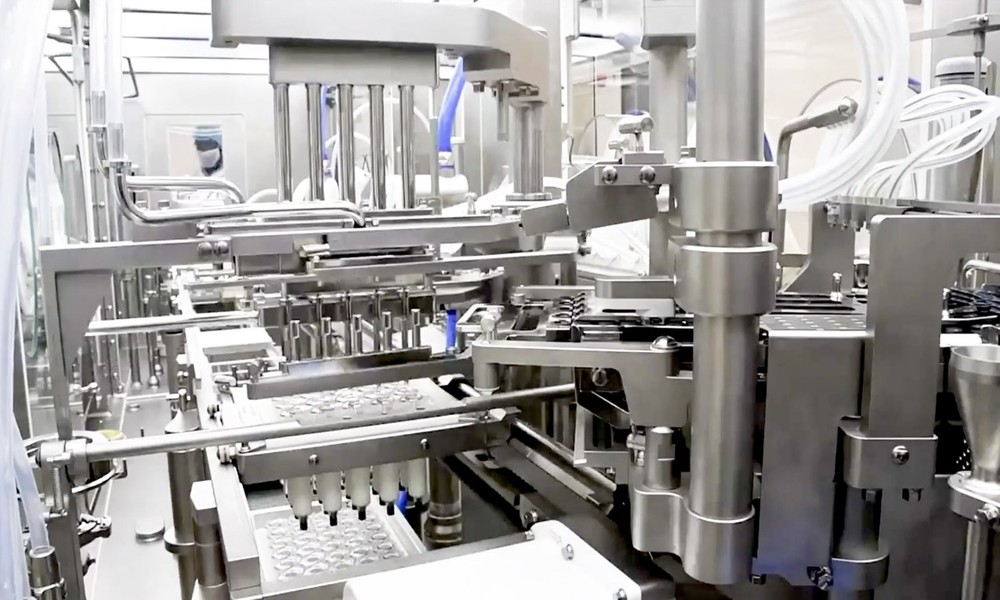
Medical device assembly requires controlled environments, validated processes and trained operators who understand that the components they handle will contact or support human life. AMT, a precision manufacturing company in Singapore, performs device assembly operations under conditions designed to produce consistent, regulation-compliant output for medical device companies serving global markets. From subassembly of injection-moulded housings to final packaging of sterile-ready products, each step follows documented procedures that regulatory auditors can trace from start to finish.
The Assembly Process in Medical Device Production
Device assembly sits at the intersection of component manufacturing and finished product release. Individual parts, whether moulded, machined or purchased, arrive at the assembly area with incoming inspection records confirming their conformance to specification. Operators follow work instructions that define the sequence of operations, the tools and fixtures required, and the inspection checkpoints built into each assembly stage.
Fixtures and Joining Methods
AMT’s assembly lines use purpose-built fixtures that locate parts in precise alignment before joining operations begin. Ultrasonic welding, adhesive bonding, mechanical fastening and soldering each serve different joint requirements depending on the materials involved and the loads the joint will bear in clinical use. Fixture design receives careful attention because a poorly located part at the assembly stage introduces variability that no downstream inspection can correct without rework.
Validated Work Instructions
Work instructions include photographs and dimensional callouts at each step, reducing reliance on operator memory and interpretation. When AMT onboards a new assembly process for a client’s device, the quality engineering team validates the instructions through trial builds that confirm the documented sequence produces conforming output before releasing the process for volume production.
Cleanroom and Controlled Environment Assembly
Many medical devices require assembly in environments where airborne particulate contamination stays below defined limits. AMT operates cleanroom facilities classified to ISO standards, providing the controlled atmosphere that sensitive devices demand. Operators enter through gowning rooms, wear lint-free garments and follow protocols that minimise particle generation during handling.
Environmental monitoring systems track particle counts, temperature and humidity at intervals throughout each production shift. Deviation alerts trigger immediate investigation, and assembly operations pause until conditions return within specification. This level of environmental control protects devices that will contact sterile tissue or circulate within the bloodstream, where a single contaminant particle could trigger an adverse clinical event.
Chan Heng Kee, former permanent secretary of Singapore’s Ministry of Health, stated that “our regulatory framework encourages manufacturers to adopt the highest production standards, because patient safety depends on the conditions under which devices are made.” AMT’s cleanroom infrastructure reflects this expectation, giving device companies confidence that assembled products meet the cleanliness standards their regulatory filings declare.
Process Validation and Statistical Control
Regulatory authorities expect medical device manufacturers to validate their assembly processes, demonstrating through documented evidence that the process produces conforming output when operated within its defined parameters. AMT conducts installation qualification, operational qualification and performance qualification protocols for each new assembly line before releasing it for commercial production.
Monitoring Key Parameters
Statistical process control charts track key assembly parameters across production batches. Measured values include:
- Torque values on threaded fasteners
- Bond line thickness on adhesive joints
- Pull-test results on wire terminations
Operators plot these data points against control limits. When a data point approaches a control boundary, the operator alerts a process engineer who investigates the cause before the parameter drifts out of specification.
This preventive approach reduces scrap rates and rework costs. Catching a trend before it produces non-conforming product preserves both material and production time, which matters in medical device assembly where component costs and lead times can be substantial.
Traceability and Documentation
Every assembled device carries a unique identifier that links it to the production records generated during its manufacture. These records capture the lot numbers of all incoming components, the identity of each operator who performed an assembly step, the environmental conditions during production and the results of every inspection checkpoint. Device history records follow this structure to satisfy the requirements of ISO 13485 and the regulatory expectations of major markets including the EU, United States and Japan.
Label Control and Verification
Label printing systems generate serialised labels from validated software that pulls data directly from production databases. This eliminates manual transcription errors and ensures that every label matches its corresponding device. Barcode verification scanners confirm print quality before labels reach the packaging line, rejecting any label that falls below the minimum grade required for reliable scanning in hospital inventory systems.
When a device company receives a customer complaint or field report, traceability records allow rapid identification of the affected production batch. AMT’s quality team can retrieve the complete device history record within hours, supporting the root cause analysis and corrective action process that regulators expect.
Packaging and Shipment Preparation
Packaging protects assembled devices during transit and, for sterile products, maintains the integrity of the sterile barrier through to the point of use. AMT validates packaging configurations using transit simulation tests that subject packaged units to vibration, drop and compression profiles representative of the distribution environment. Seal integrity tests confirm that peelable pouches and lidded trays maintain their barrier properties after simulated shipping stress.
Finished goods enter quarantine until final release inspection confirms that all documentation is complete and all test results fall within acceptance criteria. Only after the quality department issues a formal release does the warehouse team make the batch available for shipment.
Companies evaluating partners for medical device assembly should assess process validation maturity, cleanroom capability and documentation practices alongside capacity and pricing. AMT provides accurate and reliable assembly production supported by the quality systems, trained workforce and controlled environments that medical device assembly demands for regulated global markets.