
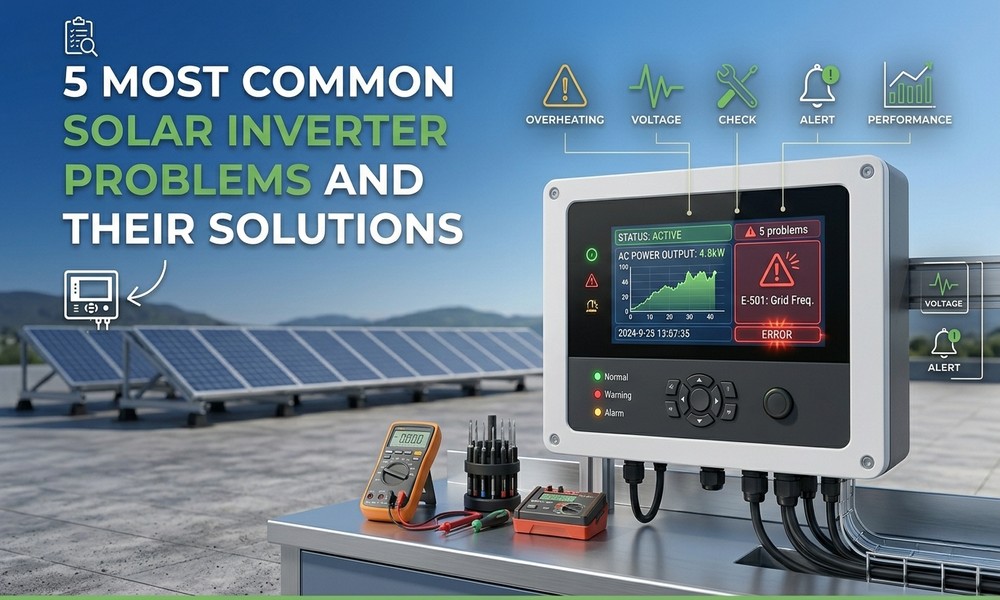
Solar inverters are critical parts of a solar energy system. They convert DC into AC for use by homes and offices. Unfortunately, these pieces of technology may develop several issues which may affect the output of a solar system. Some of the most common inverter problems and their possible solutions include:
1. Overheating
Overheating of the inverter is one of the most common problems that arise as a result of poor ventilation, direct sunlight or even faulty cooling systems. An overheated inverter causes decreased efficiency or even damage of components of the inverter.
Solution: Install the inverter in a properly ventilated place where there is no direct sunlight. Cleaning air filters and heatsinks regularly ensures proper functioning of the cooling system in the inverter. It might also be necessary to upgrade your cooling system.
2. Beeping and Alarming
When the inverter is beeping, there are two possibilities; either it is overloaded or the cooling fans are not working.
Solution: To resolve the issue of being overloaded, disconnect all devices that are not important from the circuit. Cleaning of the cooling fan regularly removes dust buildup hence ensuring that the fans function.
3. Ground Fault Error
The error of a ground fault is due to the existence of leakage of current from the solar panel to the ground, which may result from damaged wiring, connection failure, or water penetration.
Solutions: The first step involves checking the solar panel, connections, and wires for signs of damage or moisture exposure. After locating the fault, it needs to be repaired immediately.
4. Solar Inverter Not Turning On
Inverter not turning on refers to the problem where the inverter does not start, and it might be caused by a tripped inverter, loose battery connections, blown fuses, or low battery power.
Solutions: First, the reset button must be pressed if the inverter is tripped. Secondly, the battery connections should be checked and tightened. Lastly, a new fuse should be inserted if the old one has blown out.
5. DC Input Voltage Issues
Inverters operate within a specific DC input voltage range. If solar panel output falls outside this range due to shading, debris, or module failure, the inverter may trigger error codes or shut down.
Solution: Check panels for shading or debris first. If panels are functioning correctly, the issue may be with the inverter settings or internal components. A qualified technician should diagnose and resolve this.
Quick Maintenance Tips
Cleaning terminals regularly, storing the inverter in an airy space, checking wiring for damage, and monitoring daily output through your inverter app can prevent most of these problems before they occur.
Waaree: Your Trusted Solar Inverter Partner
At Waaree Energies, we offer a comprehensive range of high-quality solar inverters designed for reliability and long-term performance. Our team of experts provides end-to-end support, from installation to maintenance, ensuring your solar investment delivers optimal returns for decades to come.