
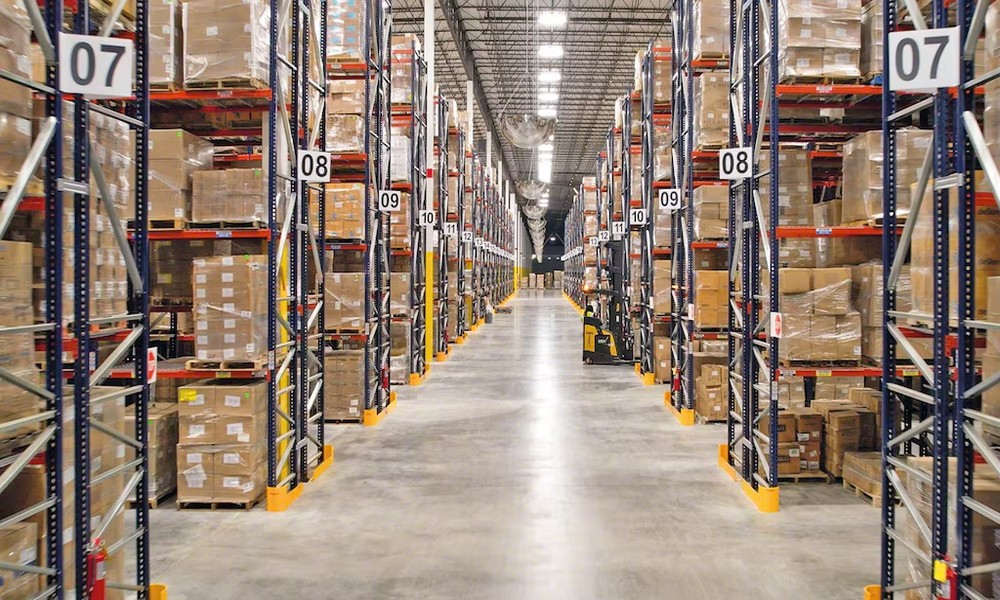
The modern landscape of industrial storage was fundamentally transformed by the invention and refinement of pallet racking, a development that emerged from the convergence of forklift technology and the pressing need for efficient vertical storage in the post-war economic boom. This innovation, seemingly simple in its basic conception yet remarkably sophisticated in its execution, has become as essential to contemporary logistics as the shipping container is to global trade. To understand the importance of these systems is to grasp a crucial chapter in the ongoing story of how humanity has sought to organise, store, and retrieve the material goods upon which modern commerce depends.
The Genesis of an Industrial Revolution
The story of pallet racking systems cannot be told without first understanding the evolution of the wooden pallet itself. During the Second World War, military logistics demanded rapid movement of supplies, and the standardised pallet emerged as an elegant solution. However, pallets alone solved only half the equation. Warehouses still stacked goods on floors or used rudimentary shelving inadequate for the scale of post-war commerce. The breakthrough came when engineers recognised that pallets and vertical storage could be integrated into unified systems, creating what we now recognise as modern pallet racking.
Singapore’s adoption of these systems in the 1970s and 1980s paralleled the city-state’s transformation into a global logistics hub. Early warehouse operators quickly discovered that in a nation where land commanded premium prices, vertical storage represented not merely an option but an economic necessity. The pallet rack became, in essence, an investment in spatial efficiency that paid dividends measured in cubic metres rather than square metres.
The Architecture of Efficiency
At its core, a pallet racking system consists of vertical uprights connected by horizontal beams, creating bays that accommodate standardised pallets. Yet this simple description belies the engineering sophistication involved. The uprights, manufactured from high-grade cold-rolled steel, are perforated at regular intervals to allow beam height adjustment. This adaptability proves crucial, as warehouses frequently modify their storage configurations to accommodate changing inventory profiles.
The beams themselves lock into the uprights through precisely engineered connections that must withstand not only the static weight of loaded pallets but also the dynamic forces generated when forklifts place or remove loads. Each component in a pallet rack system is designed with specific load capacities, clearly marked to prevent dangerous overloading. The floor anchors, often overlooked by casual observers, perform the critical function of transferring loads safely into the concrete substrate, preventing the rack from tipping or shifting under stress.
Varieties and Configurations
The evolution of pallet racking has produced numerous specialised configurations, each optimised for particular operational requirements:
- Selective racking provides direct access to every pallet position, making it ideal for warehouses with diverse, fast-moving inventory
- Double-deep systems sacrifice some selectivity for increased storage density, requiring specialised reach trucks for operation
- Drive-in and drive-through racks allow forklifts to enter the structure itself, maximising density for high-volume, low-variety operations
- Push-back configurations use inclined rails and gravity to present pallets at the front face, combining density with reasonable selectivity
- Pallet flow systems employ roller conveyors within the rack structure, creating first-in, first-out inventory rotation ideal for perishable goods
A warehouse manager at one of Singapore’s largest distribution centres observed, “Selecting the right pallet racking configuration requires understanding not just what you store today, but how your business might evolve. We’ve reconfigured our systems three times in fifteen years, and the flexibility has been invaluable.”
The Economics of Vertical Space
The financial justification for investing in quality pallet racking systems rests upon compelling mathematics. Consider a warehouse of 10,000 square metres. Without racking, utilising only floor space, such a facility might accommodate perhaps 3,000 pallet positions. Install properly designed pallet racks reaching six metres high, and that same floor space could hold 12,000 to 15,000 pallets. In Singapore’s expensive industrial real estate market, this multiplication of capacity translates directly into dramatic reductions in cost per pallet position stored.
Moreover, the operational efficiencies extend beyond pure storage capacity. Organised pallet racking reduces inventory search times, improves stock rotation, minimises product damage from improper stacking, and enhances workplace safety by eliminating unstable floor-stacked loads. These incremental improvements compound over months and years, creating substantial competitive advantages in industries where margins often depend on operational excellence.
Safety and Regulatory Compliance
The operation of pallet racking systems demands rigorous attention to safety protocols. In Singapore, the Ministry of Manpower has established comprehensive guidelines governing the installation, inspection, and maintenance of industrial racking. These regulations recognise that pallet racks, whilst appearing static and stable, actually function as load-bearing structures subject to continuous stress and occasional impact.
Regular inspections form the cornerstone of safe operation. Monthly visual assessments identify obvious damage such as bent uprights, displaced beams, or damaged safety clips. Annual professional audits employ more sophisticated techniques, including laser measurement of verticality, assessment of beam deflection, and evaluation of floor anchor integrity. Load capacity plates must remain visible and legible, their limits respected absolutely. Training programmes ensure forklift operators understand proper loading techniques and the consequences of exceeding design limits.
Installation Excellence
The installation of pallet racking demands professional expertise and meticulous attention to detail. Floor preparation assumes critical importance, as the concrete substrate must meet minimum specifications for thickness, strength, and levelness. Anchor bolts must be installed to precise depths and torque specifications. Vertical alignment must be maintained within tight tolerances, often measured in millimetres across heights of eight metres or more.
The Enduring Foundation
From humble origins in post-war logistics innovation to sophisticated modern configurations integrating with automated systems and warehouse management software, pallet racking continues serving as the fundamental infrastructure upon which efficient warehousing depends, proving daily its value in Singapore’s demanding commercial environment and standing as testament to thoughtful engineering solving practical problems with elegant simplicity in pallet racking.